


Many people think, “Aren’t all sewing threads basically the same?”
But choosing the right thread can make a big difference in the finished result!
At our store, we often hear questions like:
“Which thread should I use for this fabric?”
“What’s the difference between No. 60 and No. 90 thread?”
“Is there a sewing thread for knit fabrics?”
Choosing the right sewing thread for your fabric’s thickness, stretch, and intended use can make sewing easier and improve the finished look of your project. ✨
In this article, we’ll explain the basics of sewing thread for home sewing machines, using the questions we hear most often in our store.
What’s the Difference Between Sewing Machine Thread and Hand Sewing Thread?
Before we introduce sewing machine thread, here’s a helpful tip! 👀
Have you ever tried using sewing machine thread for hand sewing and found it difficult to use? 🤔
The reason is the twist of the thread.
In general, sewing machine thread has a Z-twist, which helps keep the thread stable when sewing at high speed. Hand sewing thread has an S-twist, which helps prevent the thread from twisting as you sew by hand.
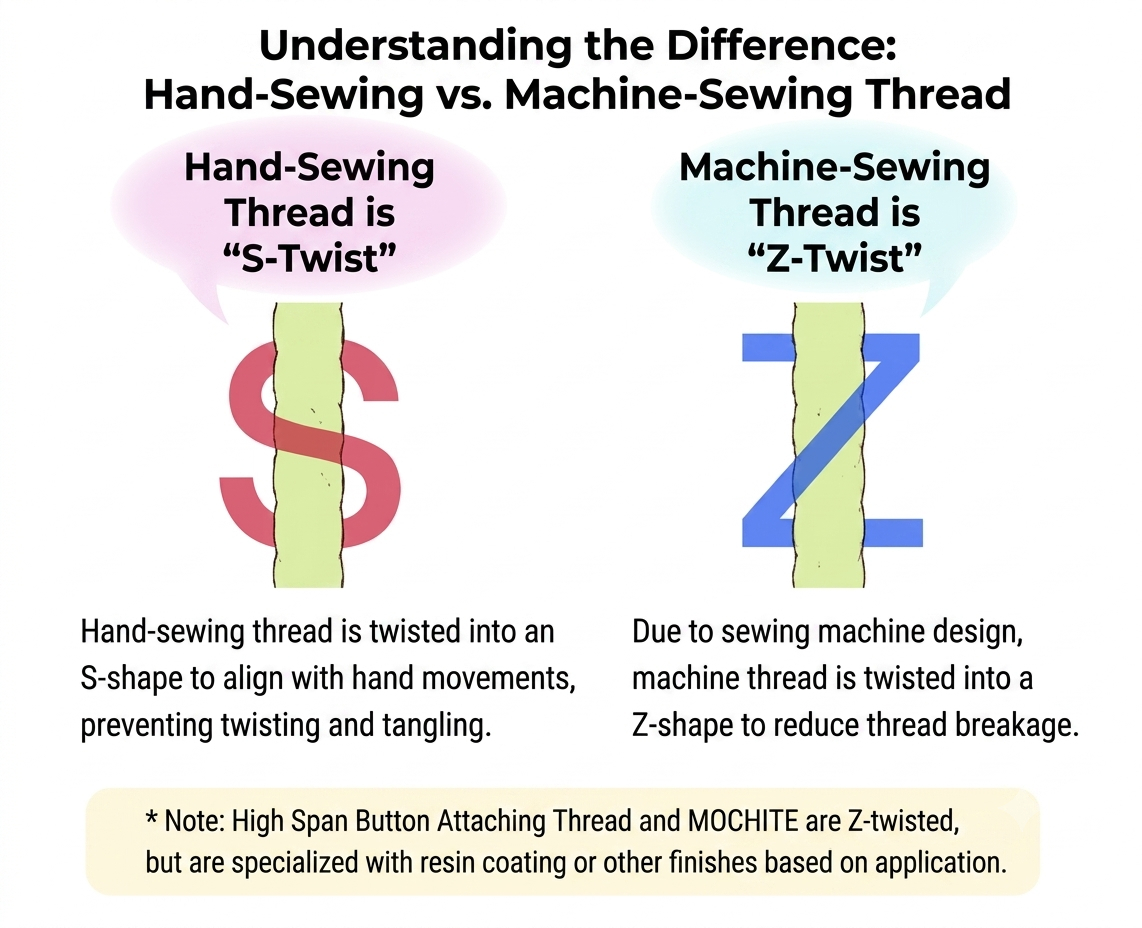
This difference in twist affects how the thread handles, so we hope you’ll remember it as a useful sewing tip!
Now, let’s get into the basics of choosing sewing machine thread.
目次
Not All Sewing Machine Threads Are the Same! Let’s Start with the Basics📝
The following three points will help you choose the right sewing machine thread!
① Thread weight
② The right type of thread for your fabric
③ A thread colour that matches your fabric
Let’s look at each one!
How Do You Choose the Right Thread Weight?
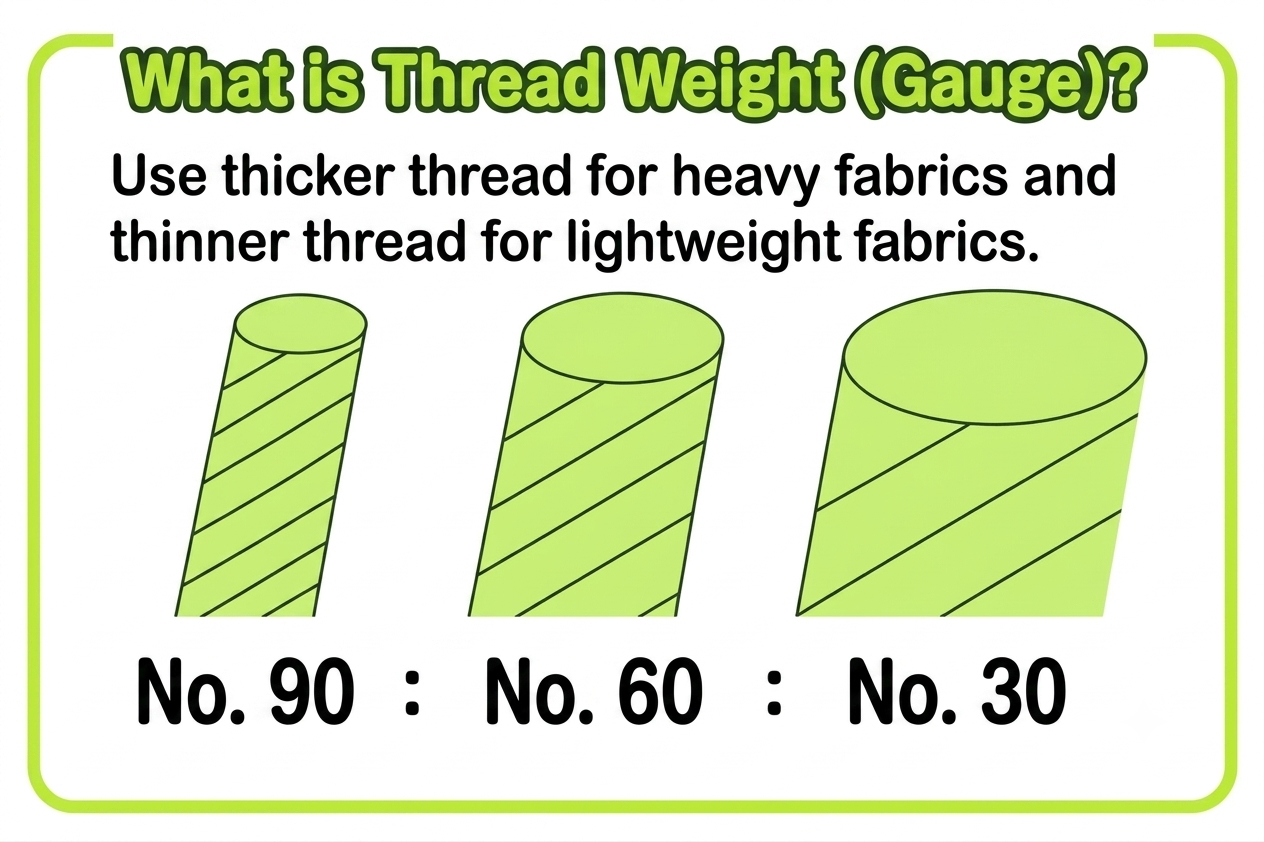
Sewing machine thread comes in different weights, such as No. 60, No. 90, and No. 30.
In general, the higher the number, the finer the thread, and the lower the number, the thicker the thread.
No. 60 is the standard thread weight most commonly used with home sewing machines.
No. 90 is suitable for lightweight fabrics, while No. 30 or No. 20 is often used for heavier fabrics or when you want your topstitching to stand out.
| Thread Weight | Recommended Needle Size | Suitable Fabrics | Recommended Uses |
|---|---|---|---|
| No.90 | 7-9 | Lawn, organza, lightweight lining, lightweight cotton | Lightweight blouses, small projects, delicate sewing |
| No.60 | 9-11 | Sheeting, broadcloth, oxford, medium-weight cotton | School bags and accessories, pouches, drawstring bags, clothing, small projects |
| No.50 | 11-14 | Medium-heavy cotton-linen blends, canvas, firm medium-weight fabrics | Bags, small projects, and slightly heavier items |
| No.30 | 14-16 | Canvas, denim, heavy canvas, faux leather | Heavy-duty sewing, bags, and decorative topstitching |
| No.20 | Around Size 16 | Denim, heavyweight fabrics, sturdy bag materials | Visible topstitching and jeans-style stitching |
Choose the Right Type of Thread for Your Fabric
Once you’ve chosen the right thread weight, the next step is choosing the right type of thread.
Even threads with the same weight, such as No. 60, are made for different types of fabric, including regular woven fabrics and knit fabrics.
Using the right thread for your fabric helps prevent puckering and thread breakage, giving your project a cleaner, more professional finish.
Let’s take a closer look at the different types of sewing machine thread.
○Schappe Spun
Not Sure Which Thread to Choose? Start with Schappe Supin
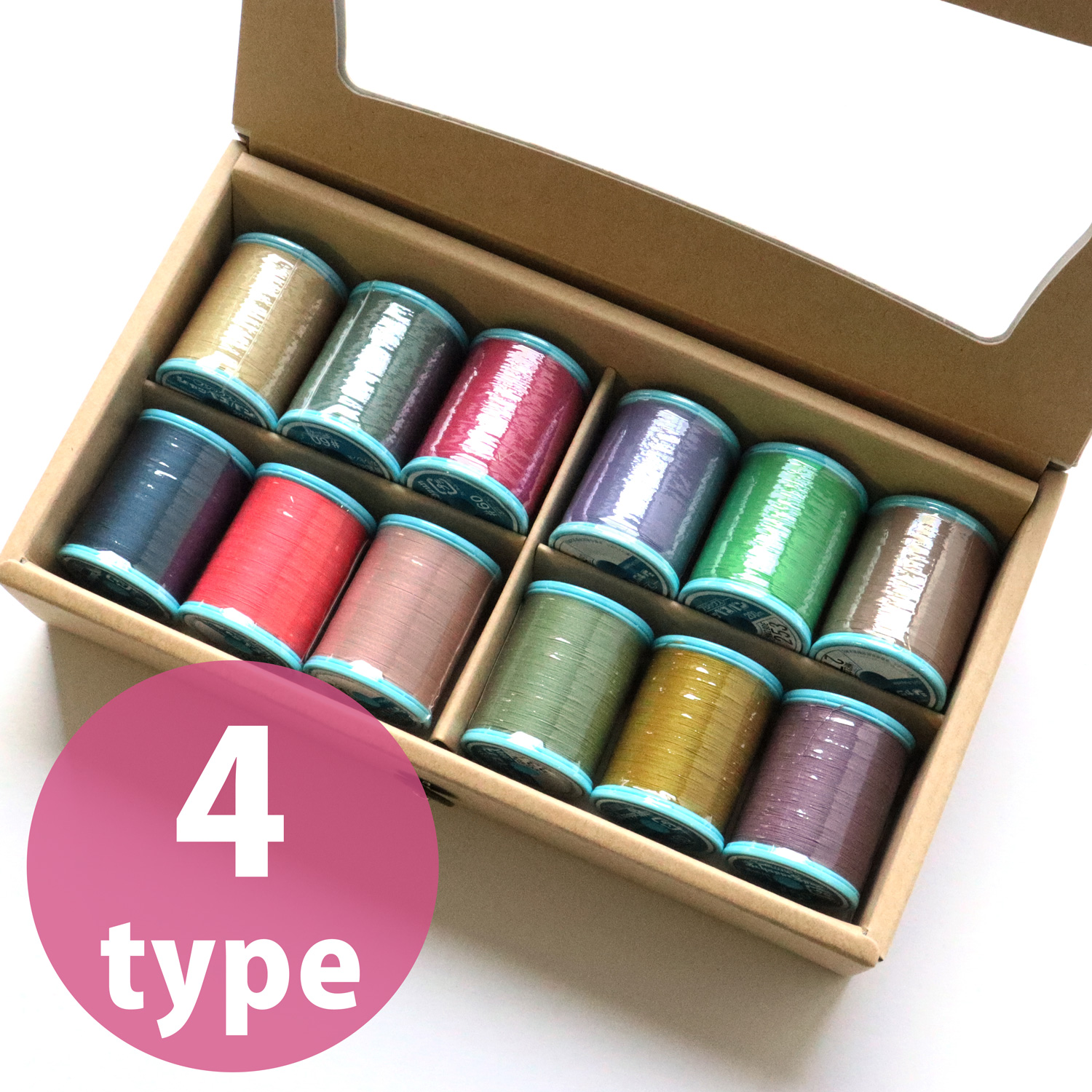
Schappe Spun is a classic polyester sewing machine thread that is widely used for home sewing.
The standard No. 60 is suitable for medium-weight fabrics, and there are also finer and thicker options for lightweight and heavyweight fabrics, making it easy to choose the right one for your project.
It’s suitable for a wide range of projects, including school bags and accessories, pouches, drawstring bags, clothing, and bags. It’s also an excellent first sewing thread for beginners. 👍
| Thread Weight | Suitable Fabrics | Recommended Uses |
|---|---|---|
| No.90 | Lightweight fabrics such as lawn, satin, georgette, and organz | Lightweight blouses, dresses, small projects, and linings |
| No.60 | Medium-weight fabrics such as broadcloth, sheeting, and twill | Clothing, pouches, drawstring bags, bags, and small projects |
| No.30 | Heavyweight fabrics such as denim, canvas, and leather | Heavy-duty bags, denim projects, canvas accessories, and leather-look projects |
![FK56 FUJIX フジックス シャッペスパン 普通地用 ミシン糸 #60 200m [Col.304~403/FC] (個)](https://www.nippon-chuko.co.jp/shop/html/upload/save_image/0413202006_6256b1e63175d.jpg)
![【タイムセール】FK69 FUJIX フジックス シャッペスパン 厚地用 ミシン糸 #30 100m [Col.168~403] (個)](https://www.nippon-chuko.co.jp/shop/html/upload/save_image/0413201844_6256b19487d33.jpg)
![【タイムセール】FK66 FUJIX フジックス シャッペスパン 薄地用ミシン糸 #90 300m [Col.168~403] (個)](https://www.nippon-chuko.co.jp/shop/html/upload/save_image/0413202104_6256b2203f590.jpg)
○Regilon
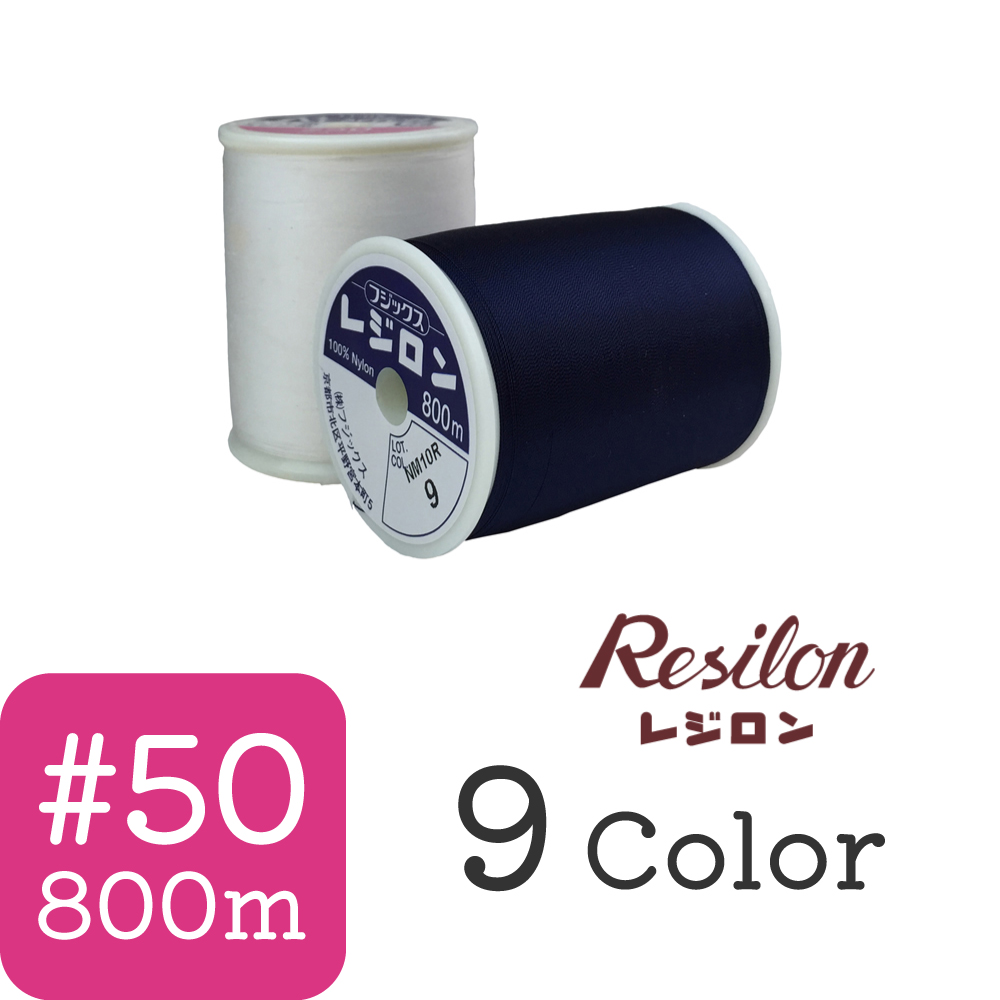
For Knit and Stretch Fabrics: Regilon
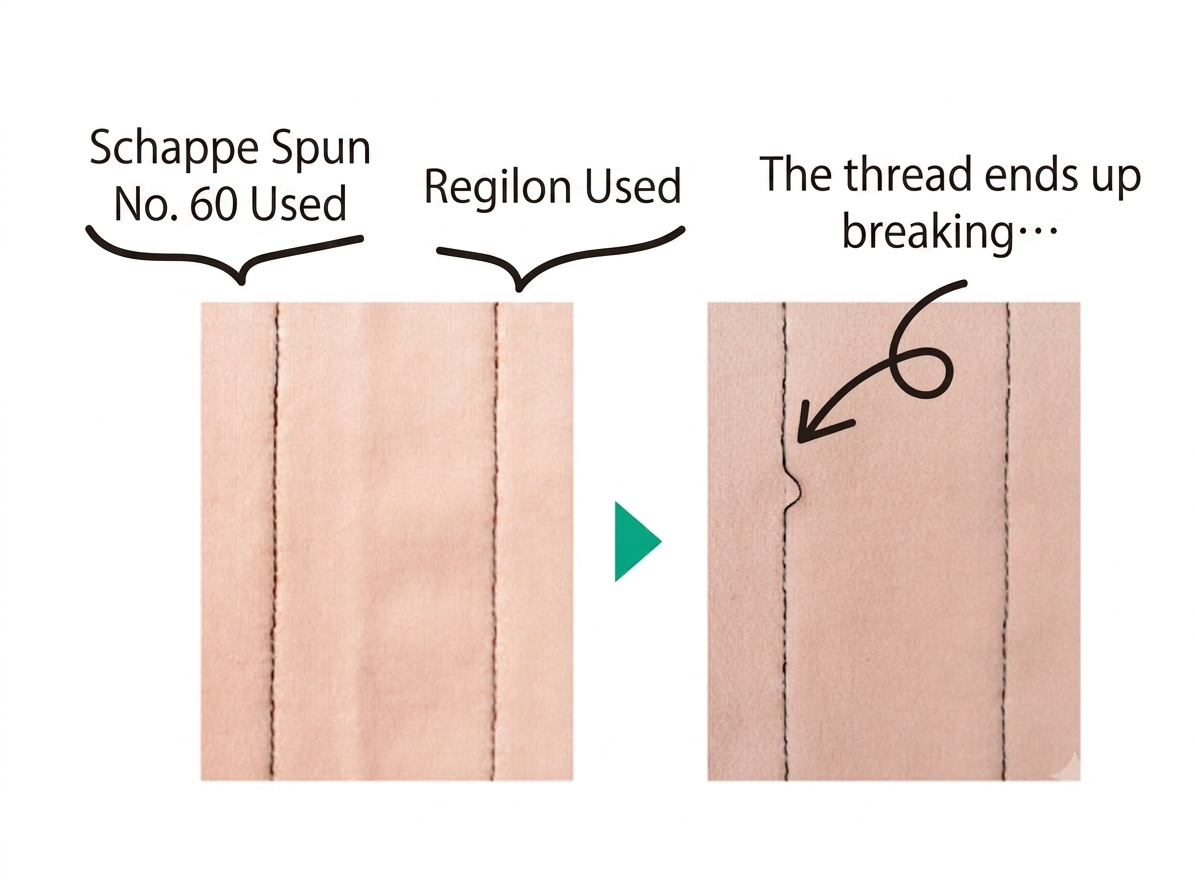
Regilon is recommended for stretch fabrics such as T-shirt fabric, knits, and jersey.
Because the thread has just the right amount of stretch, it moves with the fabric and helps prevent the seams from becoming tight or puckered.
If you sew knit fabric with regular sewing thread, the stitches may break when the garment stretches during wear.
When sewing stretch fabrics, it’s best to choose a thread that stretches with the fabric.
Recommended needle size: No. 11–14
Chuko Onlineオンラインストアでご注文
Chuko Online![FK80 ニット用ミシン糸 レジロン #50 300m [Col.85~404] (個)](https://www.nippon-chuko.co.jp/shop/html/upload/save_image/0628160742_62baa8bed4487.jpg)
○Jeans Stitch
For Denim and Heavy Fabrics: Jeans Stitch
Jeans Stitch is ideal for denim, heavy canvas, and bag-making fabrics.
This thicker thread is perfect when you want your stitches to stand out or add a decorative accent to your project.
It’s a great choice for jeans-style topstitching or for highlighting areas such as bag openings and handles.
For the best results, use a larger sewing machine needle and sew at a slower speed rather than forcing the machine.
Recommended needle size: No. 14–16
Chuko Onlineオンラインストアでご注文
Chuko Online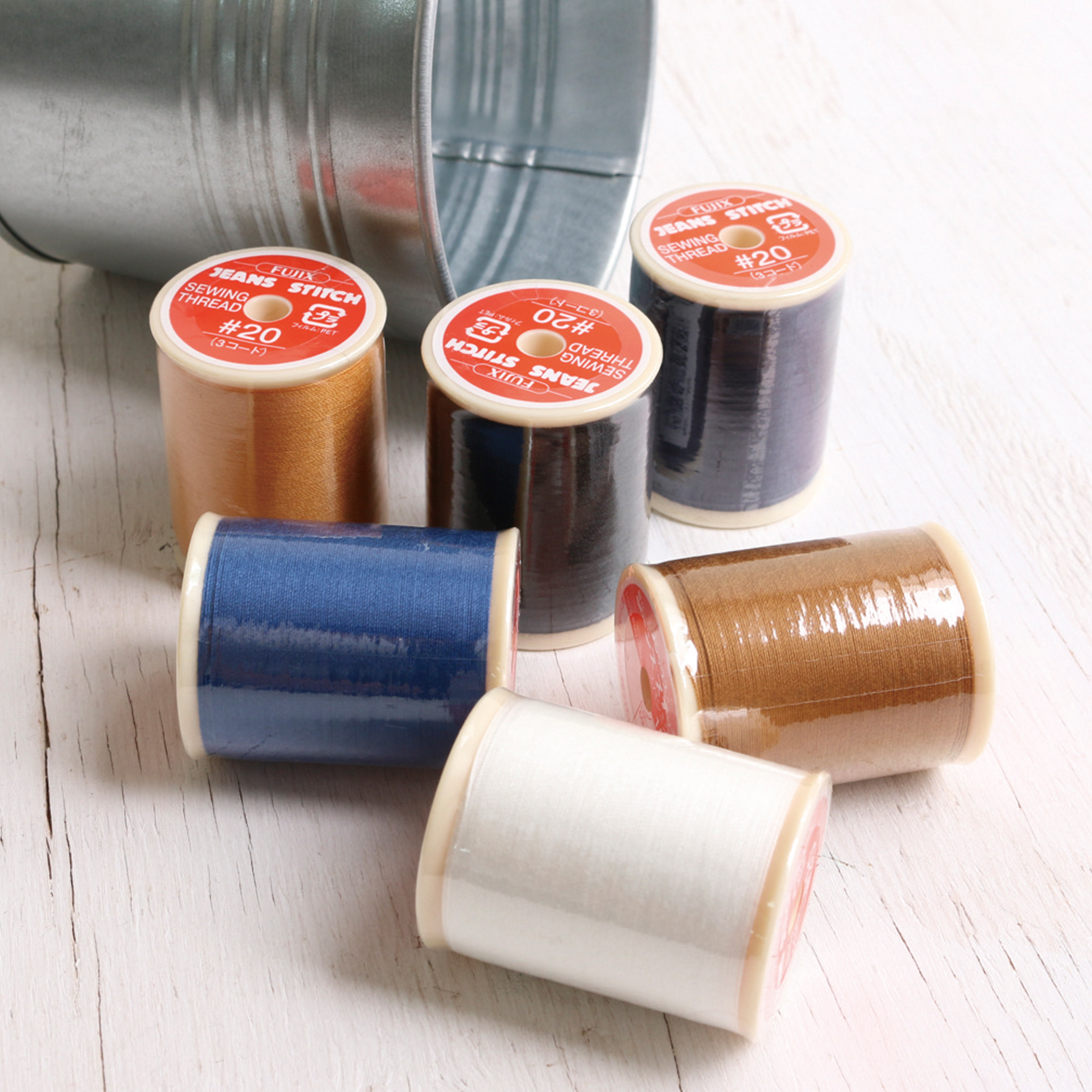
○King Leather
For Faux Leather and Leather-Look Fabrics: King Leather
King Leather is a great choice for sewing faux leather, leather-look fabrics, and other thick materials used for bags.
It’s ideal for projects such as pouches, bags, smartphone cases, and items made with faux leather parts when you want a sturdy, durable finish.
For thicker materials, using a leather needle or a larger sewing machine needle will make sewing easier.
Recommended needle size: No. 14–16
Chuko Onlineオンラインストアでご注文
Chuko Online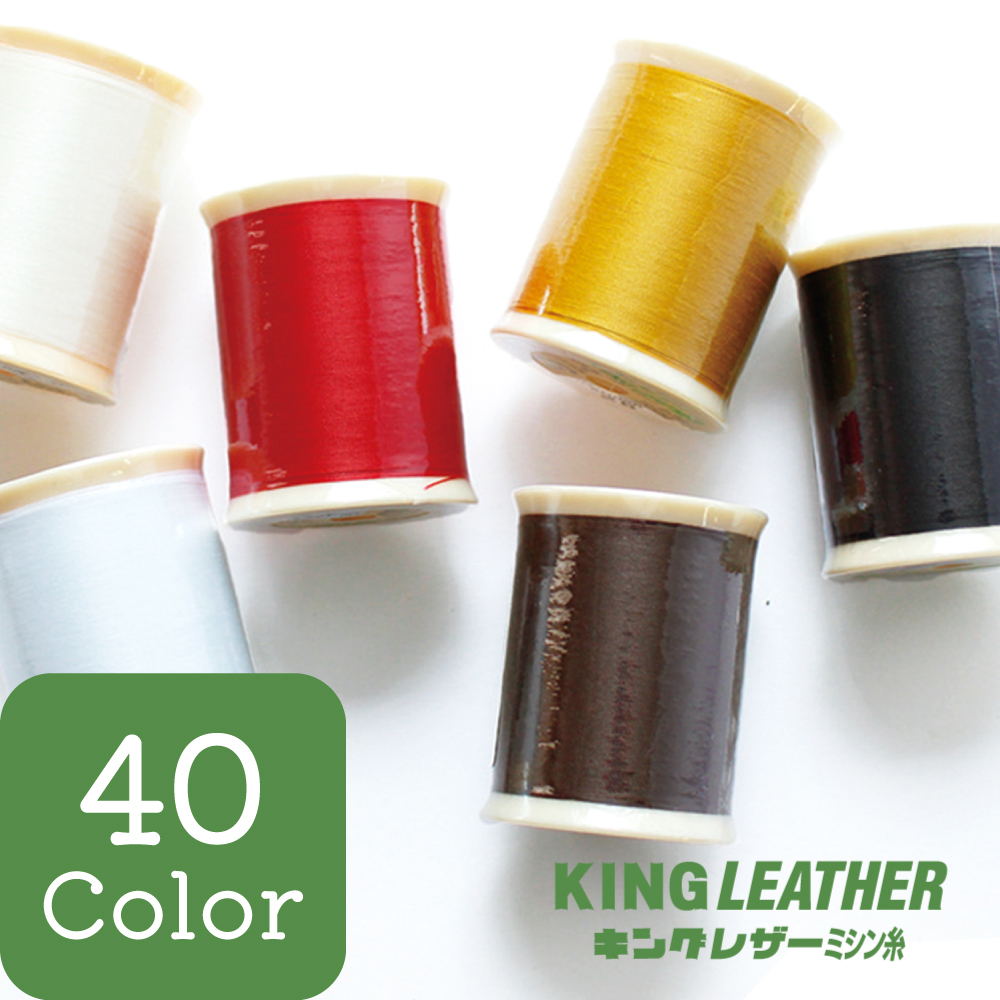
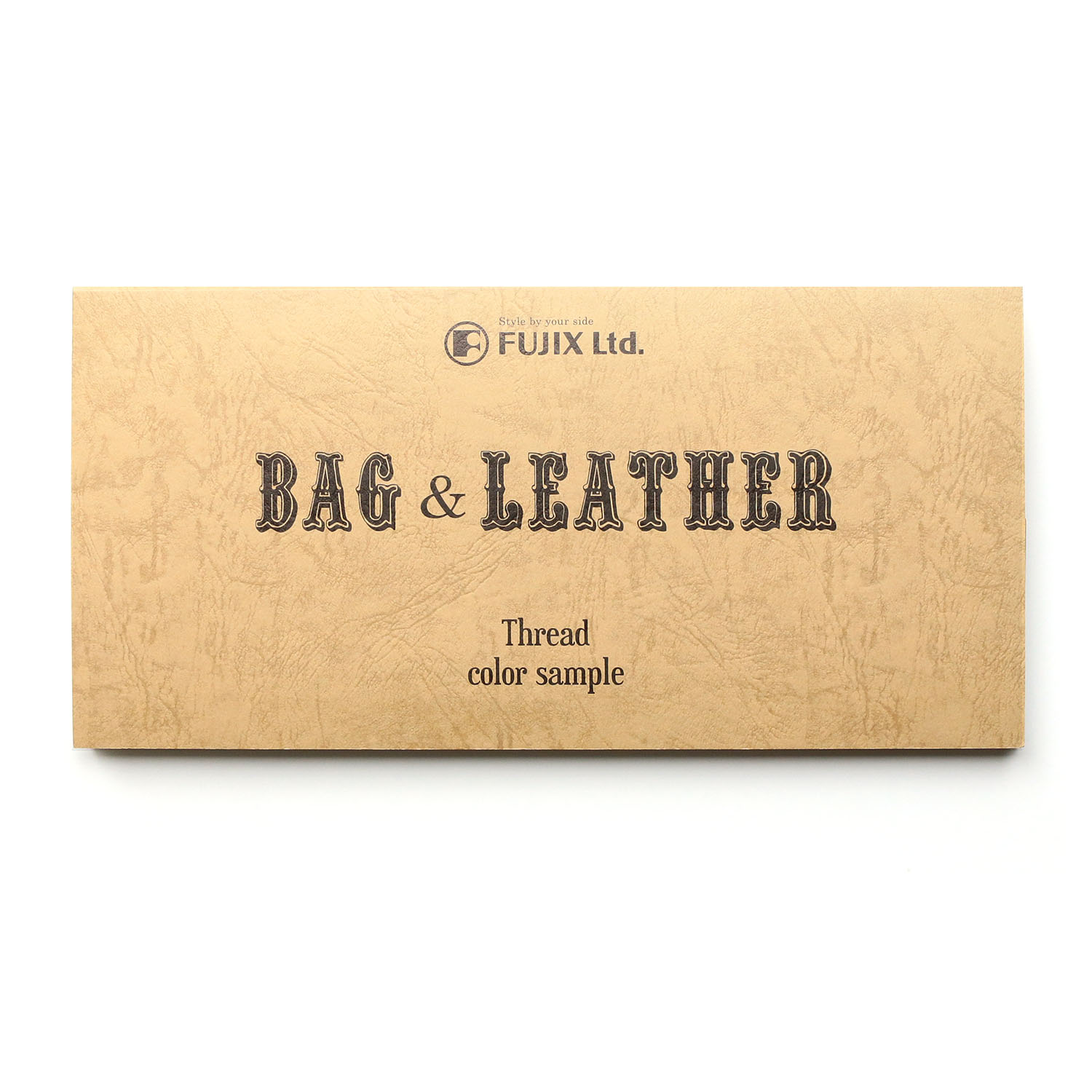
○Fine
For Lightweight and Medium-Weight Fabrics, Including Silk: Fine
Fine is a sewing machine thread that works well with lightweight cotton, chiffon, lawn, and other delicate fabrics.
Because the thread is fine and soft, it is gentle on the fabric and produces neat, delicate stitches. ✨
It’s a great choice for blouses, dresses, and lightweight accessories.
![【タイムセール】FK50 ファイン ミシン糸 #50 200m [Col.217-773] (個)](https://www.nippon-chuko.co.jp/shop/html/upload/save_image/0723153708_62db97142a0fb.jpg)
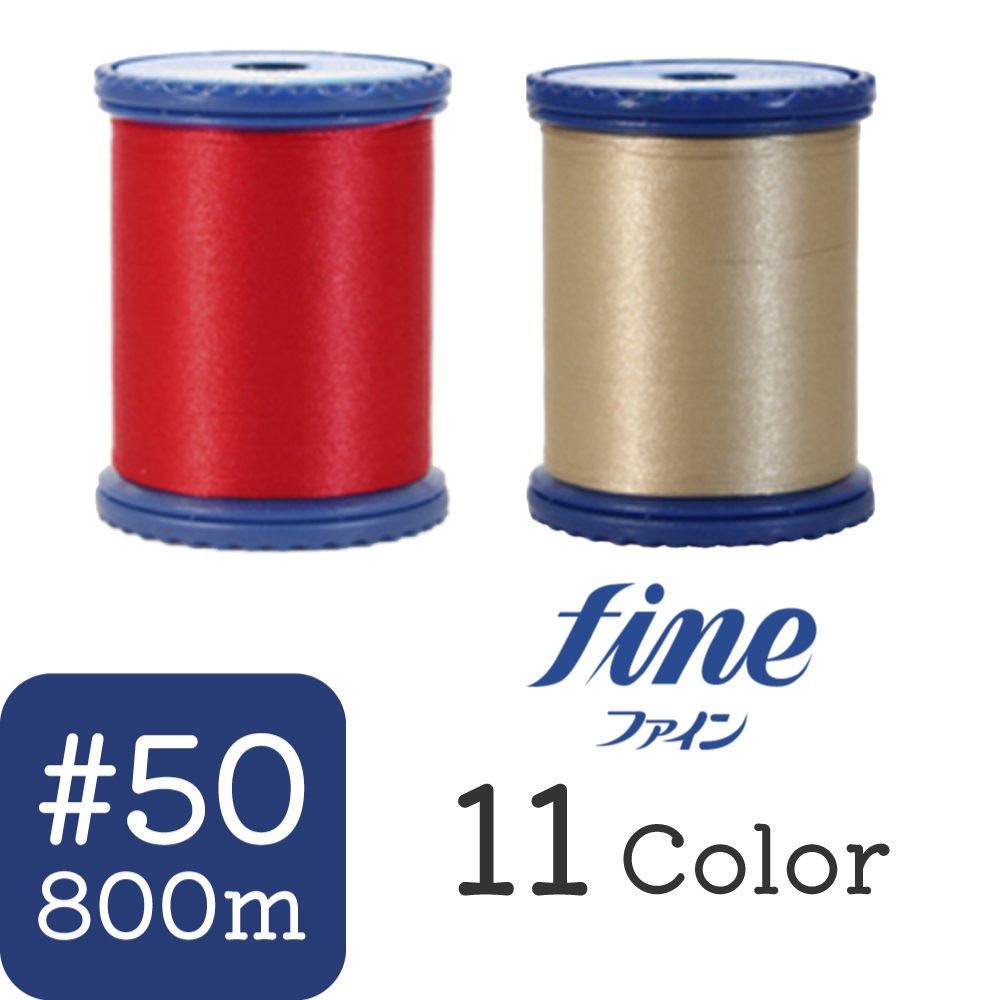
○TIRE
For a Smooth Finish with the Natural Sheen of Silk: TIRE
Made from 100% silk, TIRE offers a beautiful natural sheen, a smooth texture, and excellent elasticity.
This premium sewing thread is designed for easy sewing and an elegant finish.
It gives clothing and accessories a refined, high-quality look. ✨
Its fine, soft texture makes it suitable for a wide range of fabrics, from lightweight to medium-weight materials. It is especially recommended for garments and decorative stitching where you want the stitches to look their best.
It pairs beautifully with luxurious fabrics and materials with a graceful drape, enhancing the overall look of your project.
Recommended needle size:
No. 30 thread: Needle size No. 14–16
No. 50 thread: Needle size No. 11–14
Chuko Onlineオンラインストアでご注文
Chuko Online![【タイムセール】FK10 タイヤー 絹ミシン糸 #50 130m巻 [Col.90-404] (個)](https://www.nippon-chuko.co.jp/shop/html/upload/save_image/0723164009_62dba5d9e8d7b.jpg)
| Thread Type | Recommended Fabrics | Features | Example Uses | Available Weights |
|---|---|---|---|---|
| Schappe Spun | Lightweight to medium-weight to heavyweight fabrics | A classic home sewing thread that works well for a wide range of projects | Bags, accessories, clothing | No.90, No.60, No.30 |
| Regilon | Knit fabrics | Stretchy and helps prevent seams from becoming tight | T-shirts, jersey fabrics | No.50 |
| Fine | Lightweight cotton, lawn, chiffon | Fine and soft, creating delicate, neat stitches | Lightweight blouses, dresses, small projects | No.50 |
| TIRE | Lightweight to medium-weight fabrics | 100% silk with a beautiful sheen and smooth texture | Elegant clothing, accessories, decorative stitching | No.50, No.30 |
| Jeans Stitch | Heavy denim, canvas | Thick thread designed to make stitches stand out | Bags, decorative topstitching | No.20 |
| King Leather | Faux leather, leather-look fabrics | Durable and suitable for thick materials | Bags, accessories, leather-look projects | No.30 |
3.How to Choose the Right Thread Colour
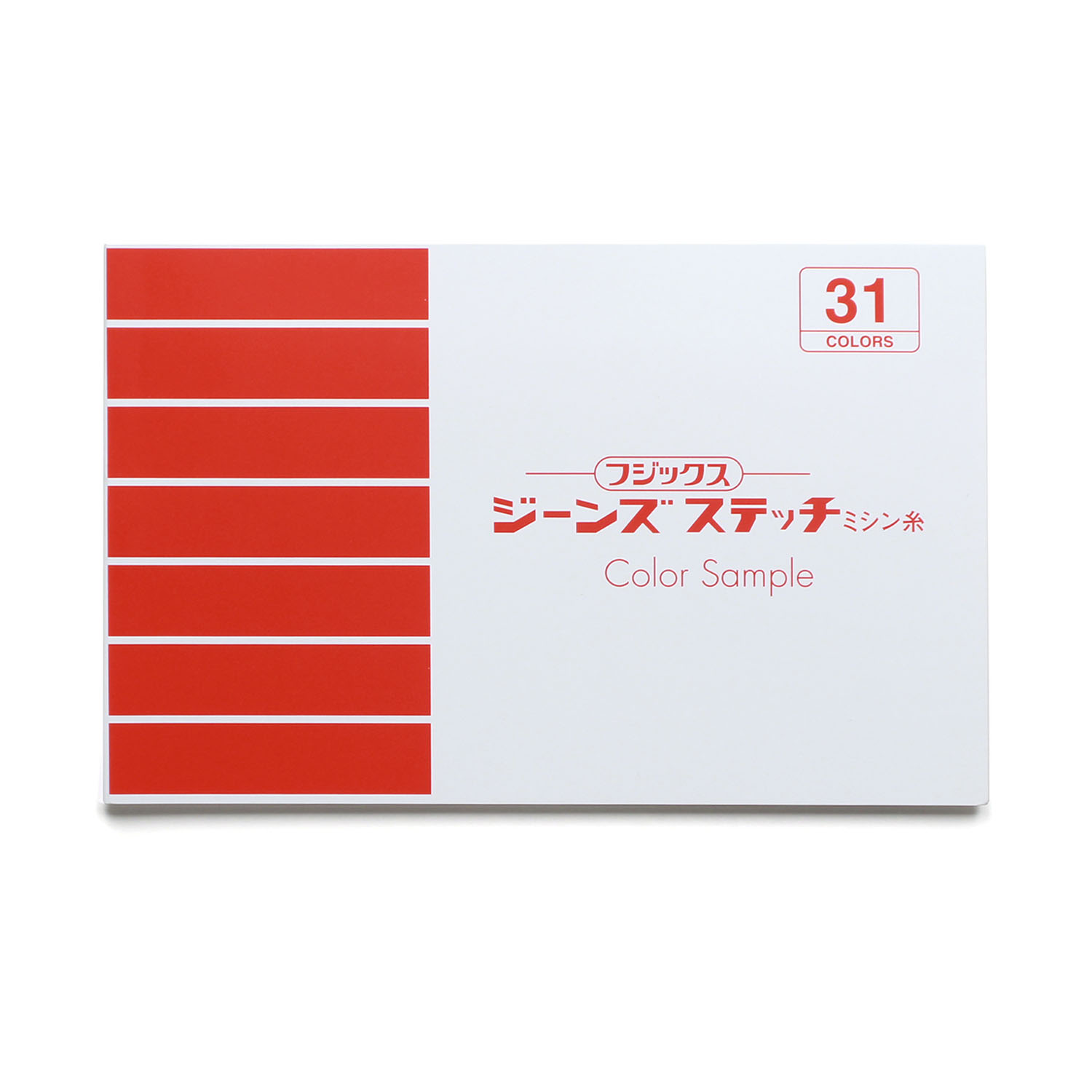
When choosing a thread colour, instead of searching for an exact match to your fabric, we recommend placing the thread on the fabric and checking how well it blends in.
This is especially helpful for patterned fabrics and fabrics with subtle colours, as it can be difficult to judge the right colour from a screen alone.
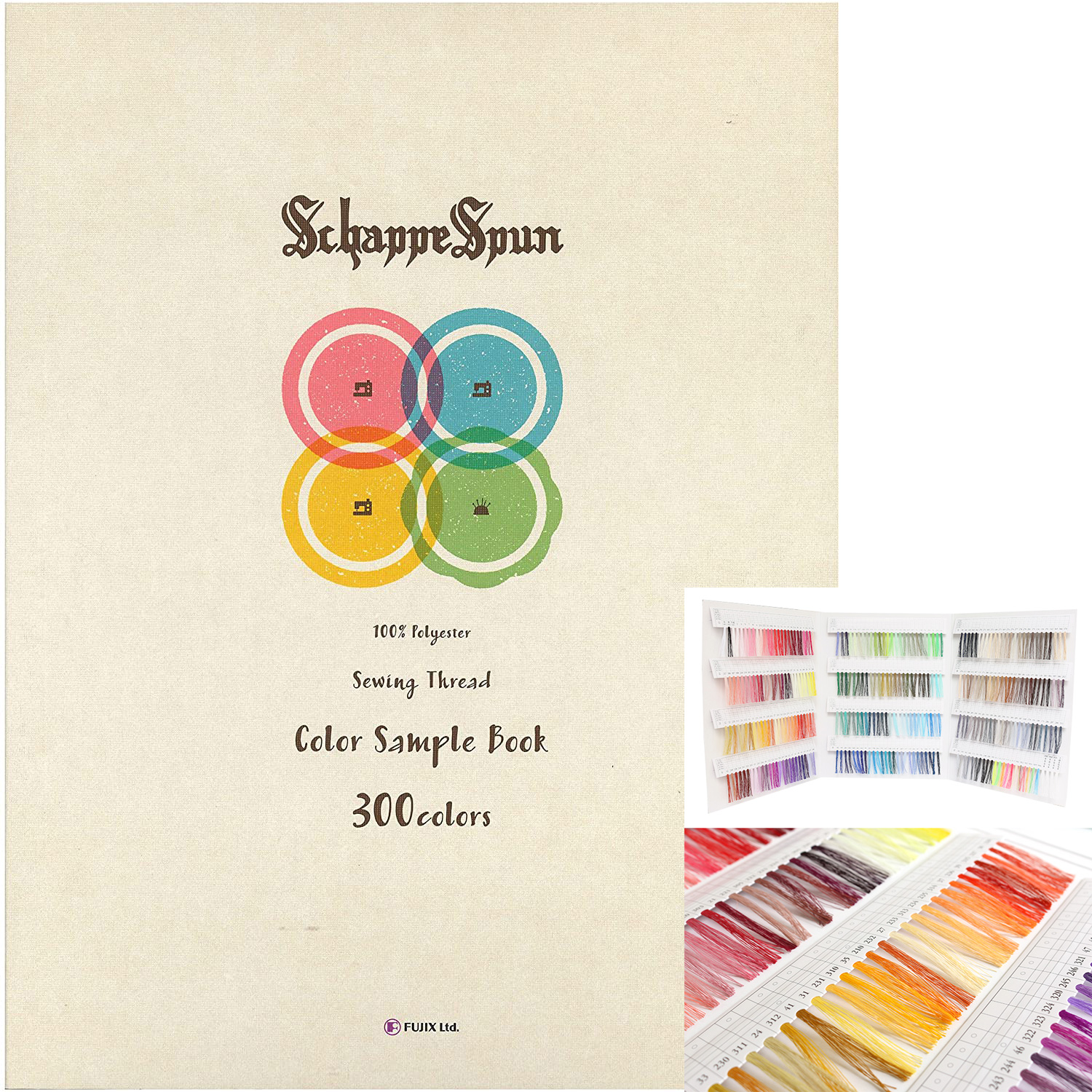
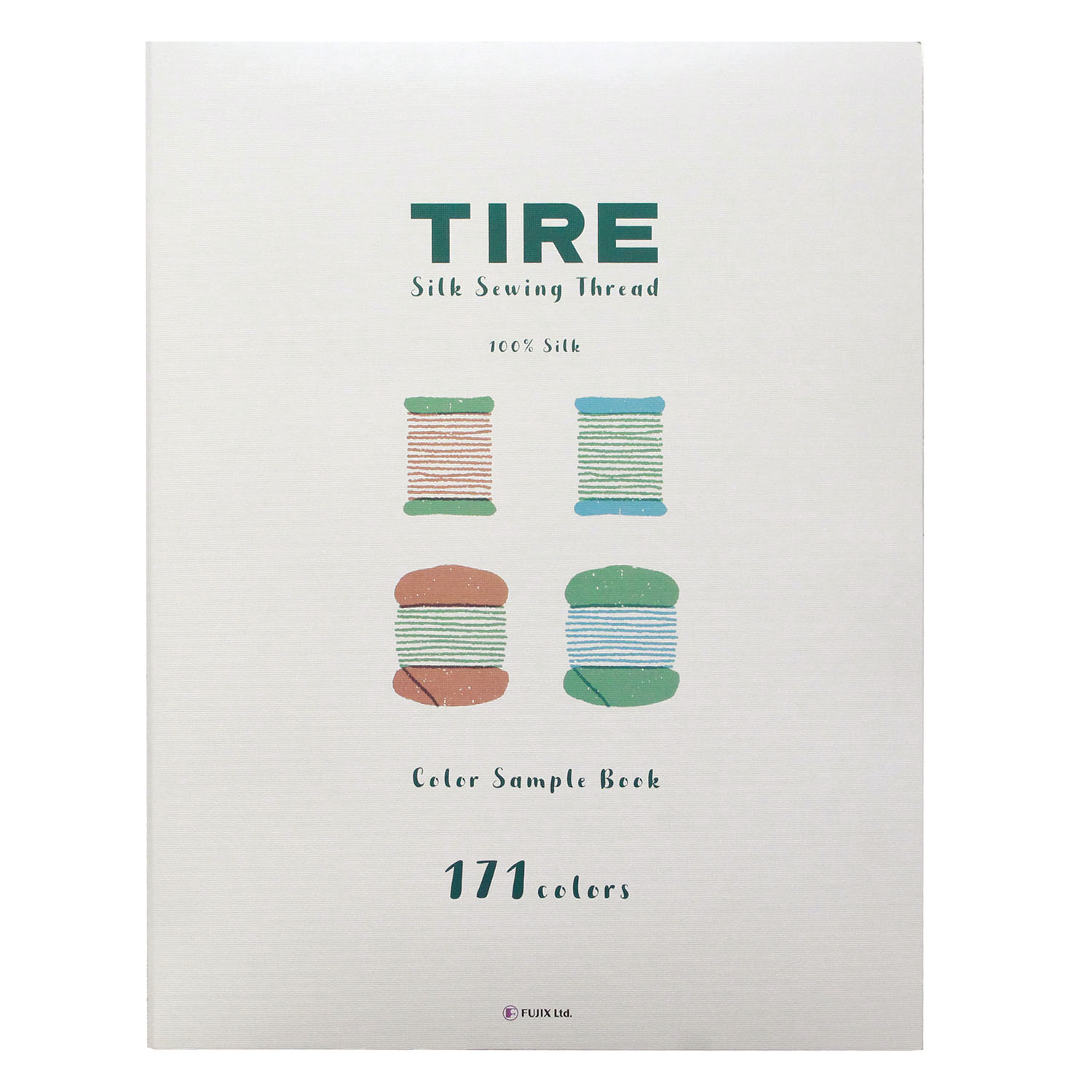
Having a physical thread colour chart makes it easier to compare the thread directly with your fabric and imagine the finished look.
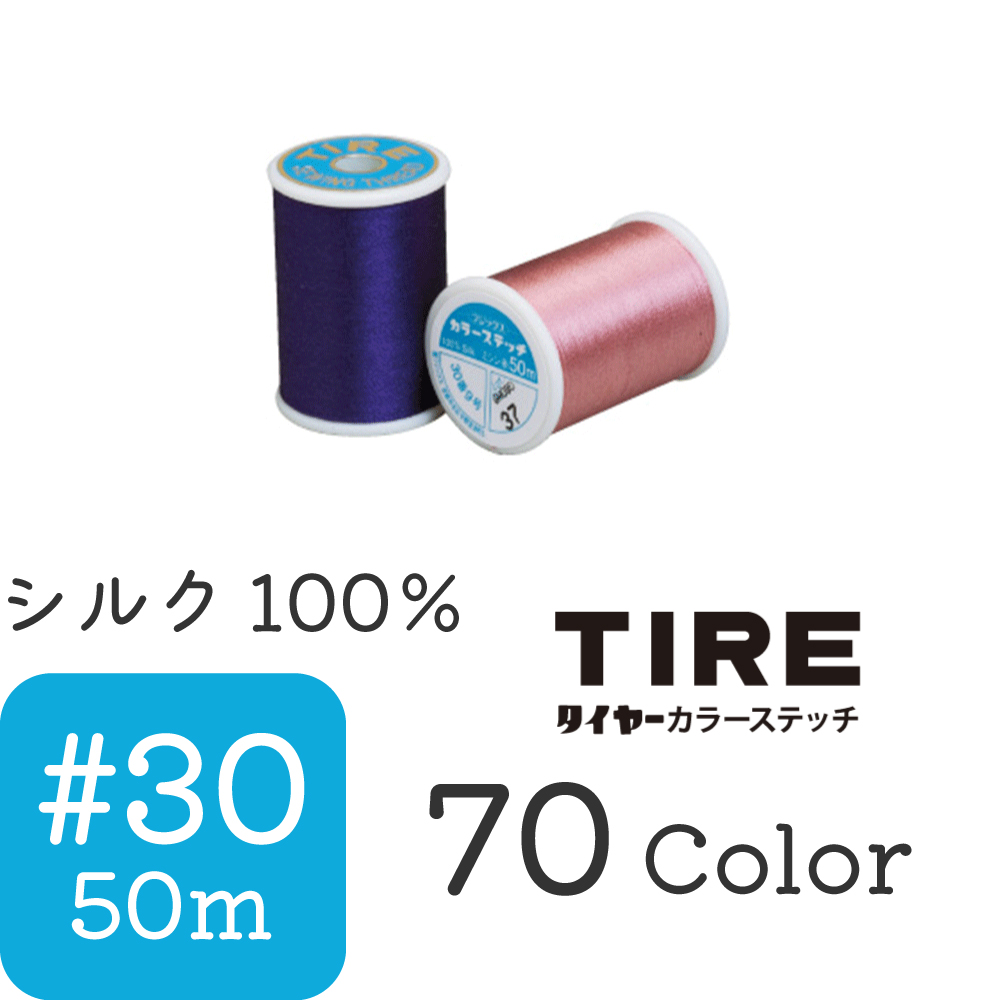
We have summarised some tips for choosing thread colours in the image and table below! We hope you find them helpful. 👀✨
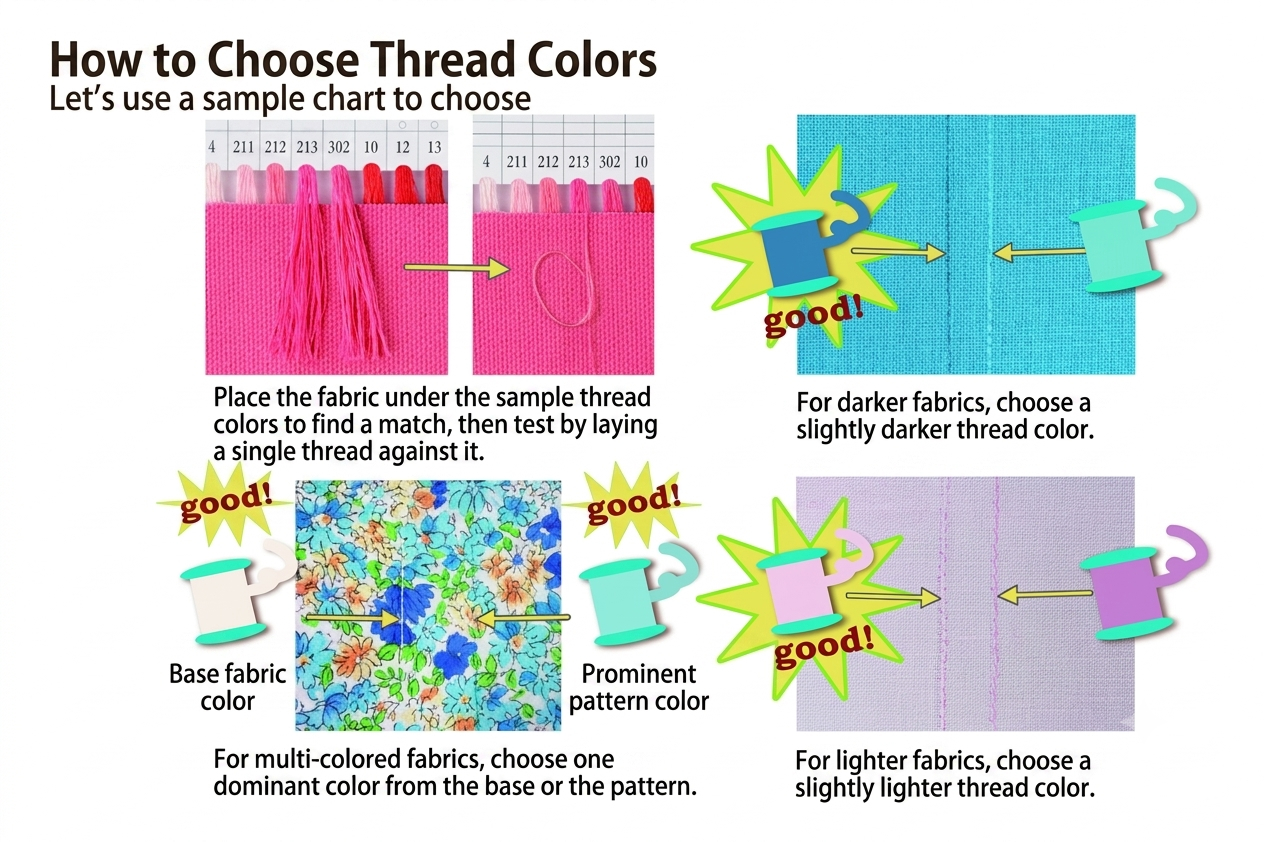
| Tips for Choosing Thread Colours | Explanation |
|---|---|
| Choose a thread colour close to the fabric colour | Place the fabric under the thread colour chart and compare each thread colour to find the closest match. |
| Choose a slightly darker thread for dark fabrics | A slightly darker thread blends naturally with dark-coloured fabrics. |
| Choose a standout colour from a multicoloured fabric | Choosing one colour from the base colour or pattern helps the stitches blend in without standing out too much. |
| Choose a slightly lighter thread for light-coloured fabrics | Be careful, as a thread that is too bright can make the stitches stand out on light fabrics. |
| Consider the colours in patterned fabrics | For patterned fabrics, look not only at the base colour but also at the colours of the patterns when choosing a thread. |
Check This Chart When You’re Not Sure Which Thread to Choose!
So far, we have introduced how to choose the right sewing machine thread weight, type, and colour.
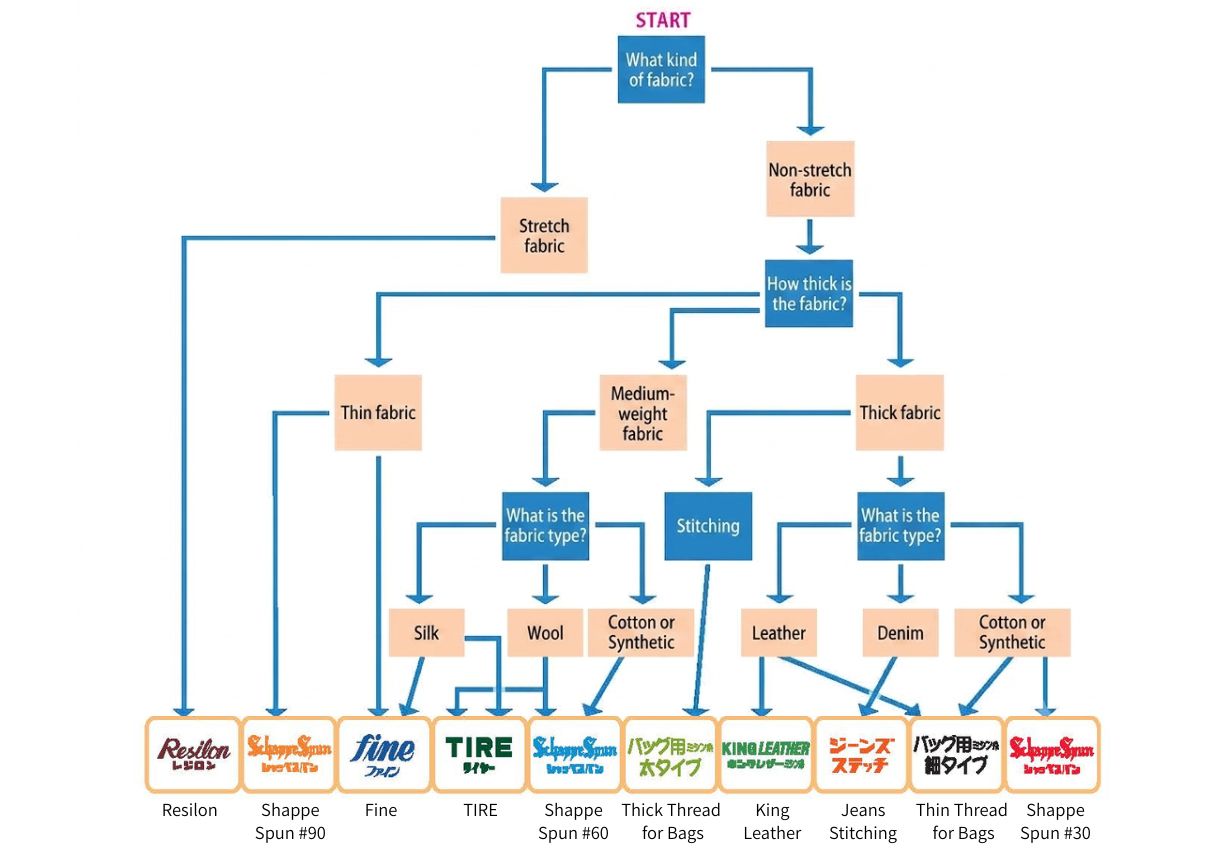
However, when choosing thread in real situations, you may still wonder, “Which thread weight is best for this fabric?” or “I’m not sure where the line is between medium-weight and heavyweight fabrics.”
In those cases, start by using the fabric thickness and the type of project you want to make as a guide!
The chart below will help you choose the right sewing machine thread for your project.
In Closing
When the combination of thread, needle, and fabric is right, your stitches will come out more neatly, and sewing with a machine will become even more enjoyable!
We hope this guide helps you choose the right thread for your projects.
Once you become more comfortable with sewing and think, “I want to use more types of thread” or “I want to stock up on larger spools of colours I use often,” industrial sewing machine thread is also a great option.
We also have an article about the types of industrial sewing machine thread and how to choose them.
Although they are designed for use with industrial sewing machines, we also have a comparison article about needles and presser feet for professional sewing machines.
Please take a look at these articles as well!
We also share products and special offers on Instagram.
Please follow our Instagram account here!
Our Official Websites
Chuko Online: https://www.nippon-chuko.co.jp/shop
Facebook: https://www.facebook.com/nipponchuko


Chuko Onlineではみなさまに日々の手芸用品の仕入れを便利にしていただけるように、お得なセール情報などを更新しております! ▽Chuko Onlineのサイトはこちらから! https://www.nippon-chuko.co.jp/shop/ みなさまからのご注文をお待ちしております。